Deixe um recado
Se você estiver interessado em nossos produtos e quiser saber mais detalhes, deixe uma mensagem aqui e responderemos assim que possível.
Epoxy Resin Pigment Ratio: What the Percentage Is Measured Against
Your epoxy resin pigment percentage is a fraction with no denominator written. Convert it to grams per litre, then to grams for the mould in front of you.
The number on the batch sheet says 3 %. The sheet does not say what the 3 % is a percentage of, and that omission is the whole problem. Convert the published figures for this same question into one unit and they span roughly two orders of magnitude. Not because anyone disagrees about the physics — because four different denominators are in circulation and most sources never name the one they are using.

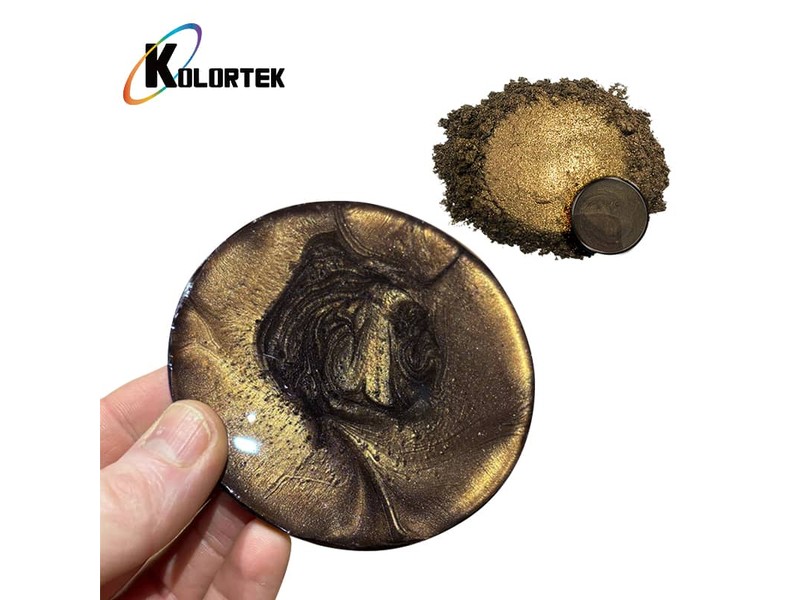
Fig. 1 — Three pigment powders as supplied, and eight castings poured from one mould in those colours. The whole page turns on this being a powder weighed on a scale rather than a paste measured by volume. Product photo.
Take three figures that are in circulation for the same question: 0.1 to 0.25 g per 100 ml, 5 to 8 g per kg of mixed resin, and 10 % by weight at the top of the craft range. Convert each into grams per litre.
The first is a volume figure against a volume unit, so it moves without a density: about 1 to 2.5 g/L. The second, grams per kilogram, moves only by about a tenth because the mixed density sits near 1 kg per litre, so it stays around 5 to 8 g/L. The third needs the density, and lands near 110 g/L when the percentage is taken against A+B at 1.10 to 1.15 kg/L.
Side by side: about 1, about 8, about 110. Two orders of magnitude for a question that has one answer.
The volume and mixed-mass figures state their denominators; the percentage still needs its mass basis confirmed. A reader holding all three cannot rank the original numbers directly, cannot tell from those numbers alone which belongs to a 5 mm coaster and which to a 30 mm pour, and needs a common unit before comparing them.
One published page prints a percentage and a grams-per-litre figure side by side, and the two do not agree with each other by a factor of about nine. The same failure, inside a single document. That is why this page exists.
Percent of Part A divides by the resin side alone. Percent of A+B divides by the mixed system. Grams per 100 ml divides by a volume. Grams per kg of mixed resin divides by a mass. Four conventions, four different denominators, one bag of powder.
The root cause is that epoxy arrives in two components. Powder weighed into Part A before the hardener is added is commonly recorded against Part A alone. Powder weighed in after the two are combined is commonly recorded against A plus B. The same physical dose, written down by two people, produces two different numbers if they use those different denominators.
In a 3:1 system those two readings differ by a third — a third, not a few percent. Part A is the smaller of the two denominators, so the same mass of powder reads a third higher against it. The B component is the whole argument, and B is the part everyone forgets to write down.
Which convention is your batch sheet using? Probably whichever one the person who wrote it was taught, and probably not stated anywhere on the sheet. Write it down. Not in a message thread, not in your head — on the sheet, next to the number.
There is a second shift underneath that one. Percent of a mass is not a mass-per-volume concentration, and a volume denominator is not a mass denominator unless the density is known. This is where the reader stops being able to compare across sources. The range of effect pigments that these conventions get applied to — pearlescent, metallic, interference, chameleon — all arrive as powder and all get divided by something.
Grams per litre is mass over volume, so it absorbs both questions at once. The denominator is a volume of mixed resin, and the density has already been accounted for in the conversion. Two figures in g/L can be compared without asking what either one was originally divided by.
Converting a percentage of A+B needs the mixed density. Take 3 %: multiply 3 % by 1.10 to 1.15 kg/L, then multiply by 1,000 to express the pigment mass in grams rather than kilograms. The result is grams of pigment per litre of mixed resin. The density turns the fraction into a weight per volume; the percentage only sets the position inside it.
Our own two internal guidelines happen to agree with each other. Resin craft runs 1 to 10 % by weight, rising with the strength of effect wanted. Metallic flooring runs 8 oz of pigment per 4 litres of epoxy.
Eight ounces is 226.8 g. Four litres at 1.10 to 1.15 kg/L is 4.4 to 4.6 kg, so the flooring figure is about 5 % by weight, and about 57 g/L.
Two guidelines written in different units, landing in the same place. That is the argument: the spread in the published figures is a unit problem, not a disagreement about physics.
On the boundary — choosing an effect is on that page, sizing the dose is on this one.
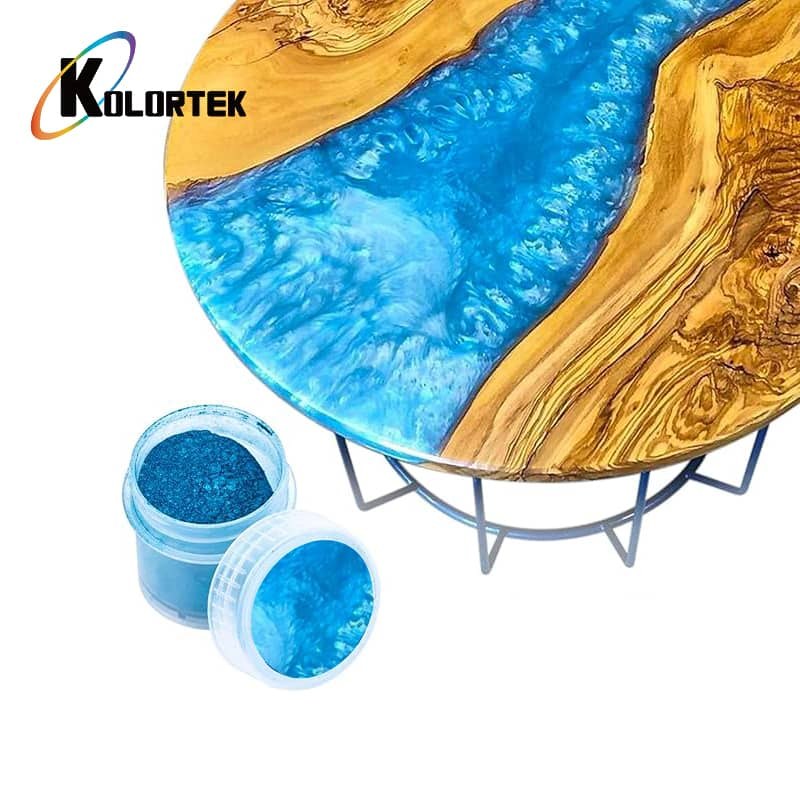
Fig. 2 — A river table pour, the deepest casting in our own sample set. On a pour this size the dose is worth working out in grams per litre before anything goes on the scale. Application photo.
Every row below is a real way somebody writes the number down. The fourth column gives the supplied rough comparison in one unit; exact conversions still require the stated denominator and the relevant density.
| How it is written | What it says | What it is divided by | Roughly, in g/L |
|---|---|---|---|
| g per 100 ml | 0.1 to 0.25 g per 100 ml | volume of resin | about 1 to 2.5 |
| % of resin weight | 1–2 % | mass of the resin only | about 11 to 22 |
| % by weight, denominator unstated | 1–3 % | unclear | about 11 to 33 |
| % into Part A | 1–5 % | mass of Part A only | about 11 to 55, before A+B correction |
| g per kg of mixed resin | 5–8 g per kg | mass of A plus B | about 5 to 8 |
| g per litre | 5–25 g/L | volume of mixed resin | about 5–25; no conversion |
The converted entries in the fourth column are supplied approximations, not measured values; an unstated denominator must be confirmed and the Part A correction applied before an exact comparison.
The point of the table is not that any row is wrong. All six are in use. The point is that only figures expressed on the same mixed-volume basis can be read across to another row, so that is what to convert into before comparing anything — with your own last batch, with a chart, with a note a customer forwarded.
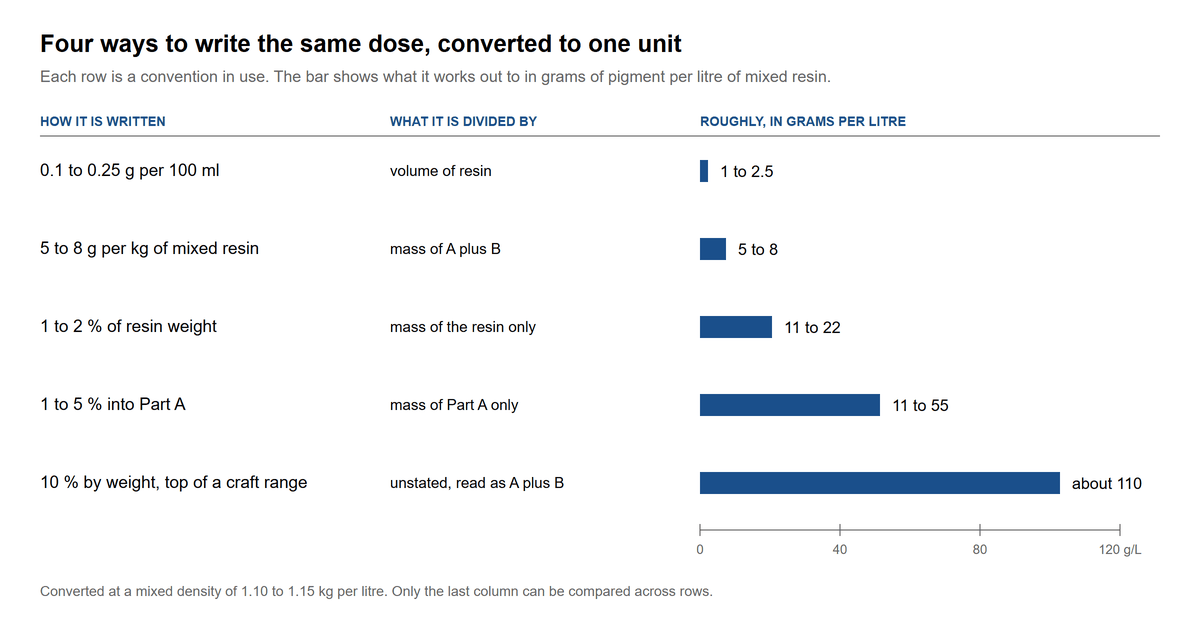
Fig. 3 — The same dose written four ways. Each convention divides by a different quantity, which is why the resulting numbers cannot be ranked until they are converted into one unit. (illustrative)
Pearlescent pigment is a platelet — a thin flat flake, and the colour comes off its face. In a poured casting the flakes come to rest roughly parallel to the open surface. What the viewer receives is the number of flakes under each square centimetre of that surface, not the mass fraction in the bucket.
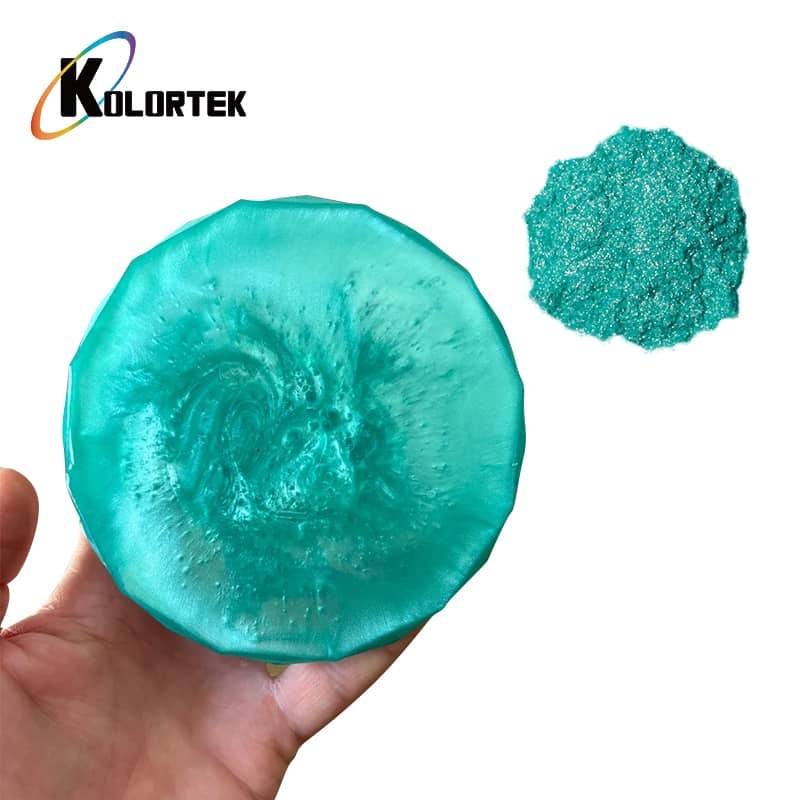
Fig. 4 — A thin round casting held up to the light. Here the flakes sit in a shallow layer, so a given mass fraction reads as a high count per square centimetre. Application photo.
At a fixed mass fraction, flakes per unit area rise with cast thickness. Our sample pieces run from a pendant under 5 mm, to a round coaster about 5 mm, to dice at 16–20 mm, to a tabletop pour at 20–40 mm. A 30 mm pour carries roughly ten times the flakes per square centimetre of a 3 mm pour at the same loading.
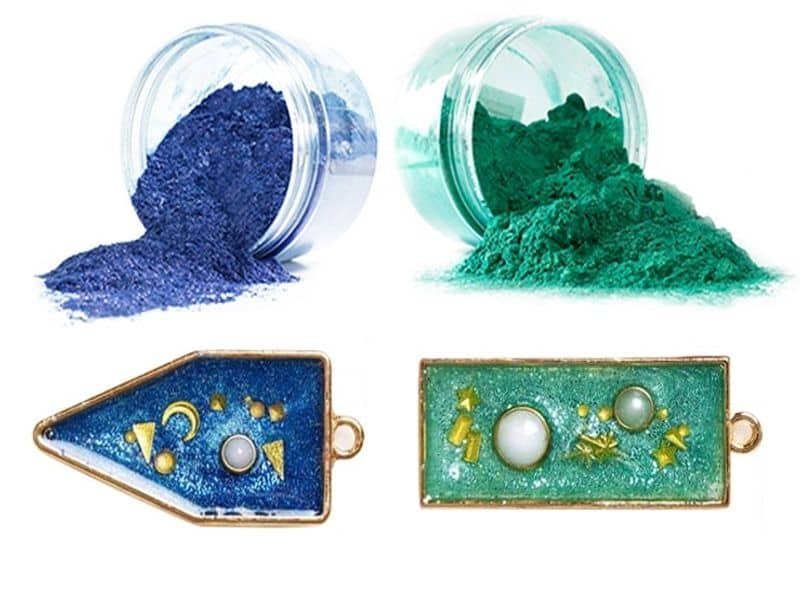
Fig. 5 — Two moulded pendants beside the pigment they were cast from. Thin moulds hold few layers of flakes, which is why thin work is dosed upward rather than downward. Application photo.
That is the explanation the project charts never give. A river table is quoted at 0.5 to 1 %, a coaster at 1.5 to 2.5 %, resin art at 2 to 3 %, jewellery at 1 to 2 %. The difference between the river-table and coaster ranges is thickness, not caution.
So: for thin work, raise the loading toward coverage; for deep work, lower it toward haze, because in a thick casting the flakes stack and the light has to travel through more of them.
If the flakes are dropping out of a low-viscosity mix, settling in low viscosity resin is the page for that — and whatever settles still has to be counted in the loading.
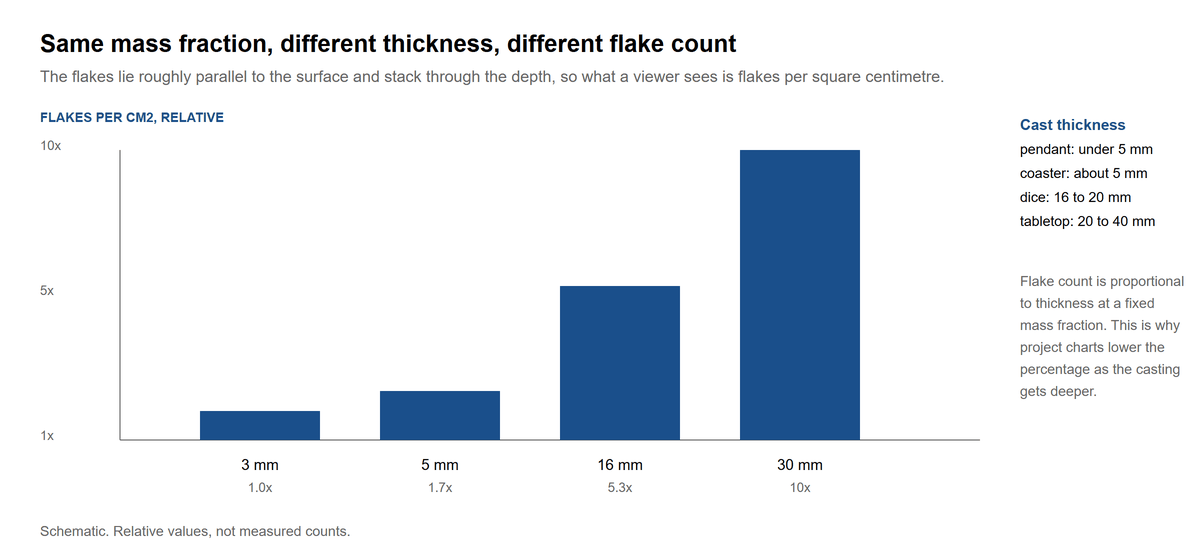
Fig. 6 — Schematic. At a fixed mass fraction the number of flakes under one square centimetre rises with cast thickness, because the platelets lie parallel to the surface and stack through the depth.
Three steps take you from a target to grams on your own scale. They work for a mould you measured and for one you filled by eye.
If your target is already in grams per litre, skip the second step and multiply litres of pour by the target instead; both routes land on the same figure. Write the target down beside the weighing, because the target is what carries to the next mould and the weighing does not. Your scale reads grams, not percent.
A 300 ml coaster mould and a 2 litre tabletop pour. Same 1.5 % of A+B, same powder.
The coaster first. Three hundred millilitres at 1.10 to 1.15 grams per millilitre is 330 to 345 g of mixed resin, and 1.5 % of that is about 5 g of pigment. Written as a target instead, the same dose is 16.5 to 17.25 g/L, which is the number to carry forward if the mould changes.
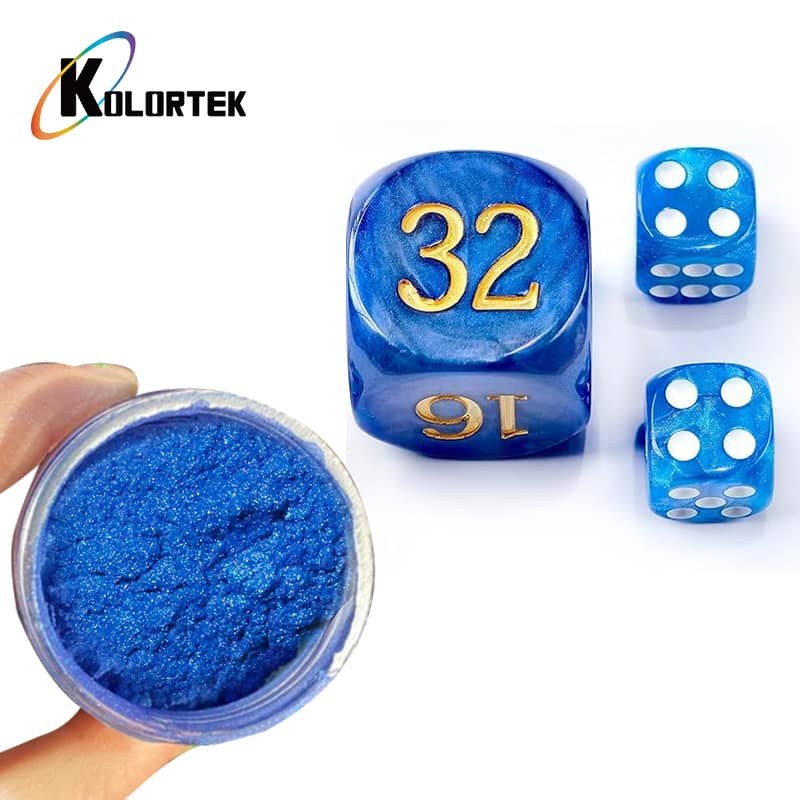
Fig. 7 — A cast die standing with the pigment it was made from, in the middle of the thickness range on this page. Application photo.
The tabletop pour is 2 litres, so 2.2 to 2.3 kg of mixed resin and 33 to 34.5 g of pigment. Six to seven times the powder of the coaster, for a pour volume about seven times larger, which is what an unchanged percentage is supposed to produce.
Now read the two weighings against the project charts. The coaster dose sits inside the published coaster range of 1.5 to 2.5 %. The same 1.5 % in the deep pour lands above the published river-table range of 0.5 to 1 %, because the flakes now sit in a column 20 to 40 mm tall. That is why the charts move the percentage down as the casting gets thicker: the number barely changes, the depth does.
The four things worth writing next to the dose are the denominator, the target look, the cast thickness and the particle size band. Those four make the number reusable. Without them it is a number nobody else can pick up.
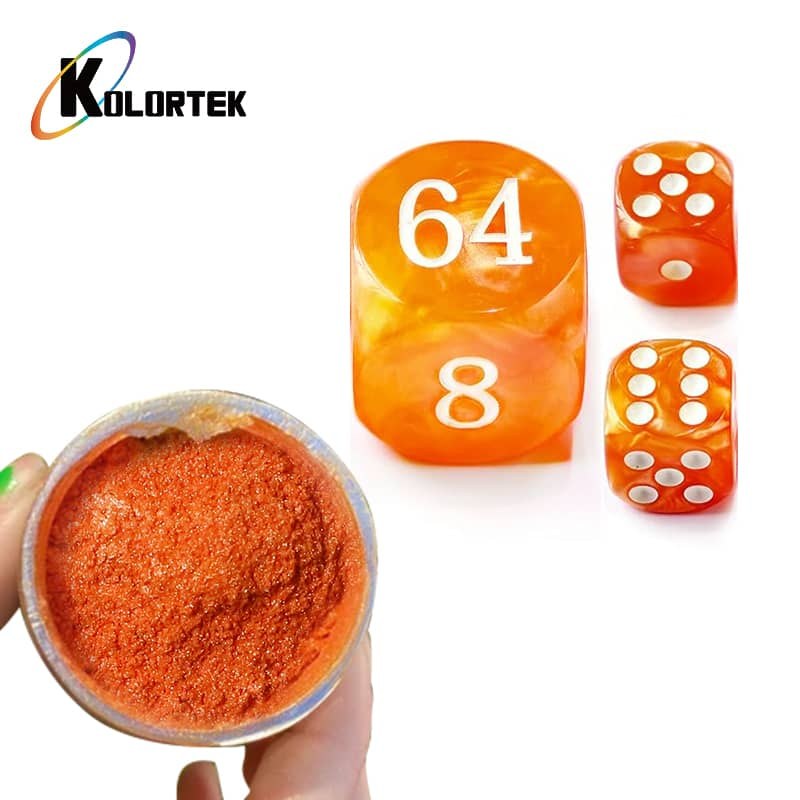
Fig. 8 — A second die from the same mould family in another colour, at the same dose. Changing the colour does not change the loading. Application photo.
The honest answer is that it depends on three things you have not told me: what the percentage is measured against, how thick the casting is, and whether you want to see through it. As a starting anchor, resin-craft guidance runs 1–10 % by weight. Convert your own figure to grams per litre first, so that the next batch can be compared with this one.
On its own the number means nothing. For the same batch in a 3:1 system, dosing at 3 % of A plus B uses a third more powder than dosing at 3 % of Part A, so two people quoting "3 %" may be dosing different amounts. And the same 3 % puts more flakes per square centimetre into a 30 mm casting than a 5 mm one, increasing the risk of losing depth to haze.
Because the pour is deep. A tabletop casting is 20–40 mm, a coaster is around 5 mm, and at the same mass fraction the deep pour stacks far more flakes per unit area. The chart is not being cautious, it is compensating for thickness.
Up to a point, and then the return stops. Past that point the casting loses depth before it gains colour, and the extra powder shows up as cloudiness rather than intensity. In thin work the ceiling is set by coverage; in deep work it is set by haze.
Send us four things and the answer stops being general: the pour volume or mould size, the cast thickness, the target look (clear, translucent or solid), and the particle size band if it is already fixed. Tell us those four and we will convert your percentage into grams per litre and confirm the grade that fits the pour. The pearl pigment colour range is on the catalogue download if you need to match a colour first.

O pigmento perolado para resina é amplamente utilizado em sistemas epóxi para criar brilho, lustro metálico e acabamentos com profunda mudança de cor em superfícies decorativas. Esses pigmentos em pó e pasta se integram diretamente às formulações de epóxi, proporcionando uma profundidade visual que os corantes padrão não conseguem alcançar. De pisos de epóxi moldados a bancadas fundidas, o pigmento perolado para resina epóxi tornou-se uma escolha padrão sempre que o trabalho decorativo com resina exige uma aparência sofisticada e de alto impacto.
LEIA MAIS
Selecionar o certo Pó de pigmento colorido para resina epóxi Determina se um piso metálico, uma bancada de resina ou um revestimento decorativo alcança um efeito visual genuíno ou se decepciona. Pós perolados, metálicos, holográficos e com mudança de cor são os tipos mais utilizados — cada um proporcionando brilho, profundidade ou comportamento de cor dinâmico distintos dentro de uma matriz epóxi curada. De pisos metálicos de alto tráfego a obras de arte em resina e superfícies arquitetônicas, pó de cor de resina epóxi influencia tanto o acabamento estético quanto o funcional.
LEIA MAIS
 Português
 English
 Français
 Deutsch
 Русский
 Español